Found 61 AI tools
Click any tool to view details
Code2.AI is an innovative online platform that uses artificial intelligence technology to help developers quickly transform ideas into code. The platform compresses the code base so that AI can understand and program alongside developers. Key benefits of Code2.AI include accelerated development processes, unlimited coding capabilities, and seamless integration with existing projects. It supports any programming language, whether for web or mobile development, providing complete functional code, not just code snippets. In addition, Code2.AI also provides detailed usage guides to help users use AI for programming more effectively.
WaveCoder is a large code language model developed by Microsoft Research Asia. It enhances the breadth and versatility of the large code language model through instruction fine-tuning. It demonstrates excellent performance in multiple programming tasks such as code summarization, generation, translation, and repair. The innovation of WaveCoder lies in the data synthesis framework and two-stage instruction data generation strategy it uses to ensure the high quality and diversity of data. The open source of this model provides developers with a powerful programming aid that helps improve development efficiency and code quality.
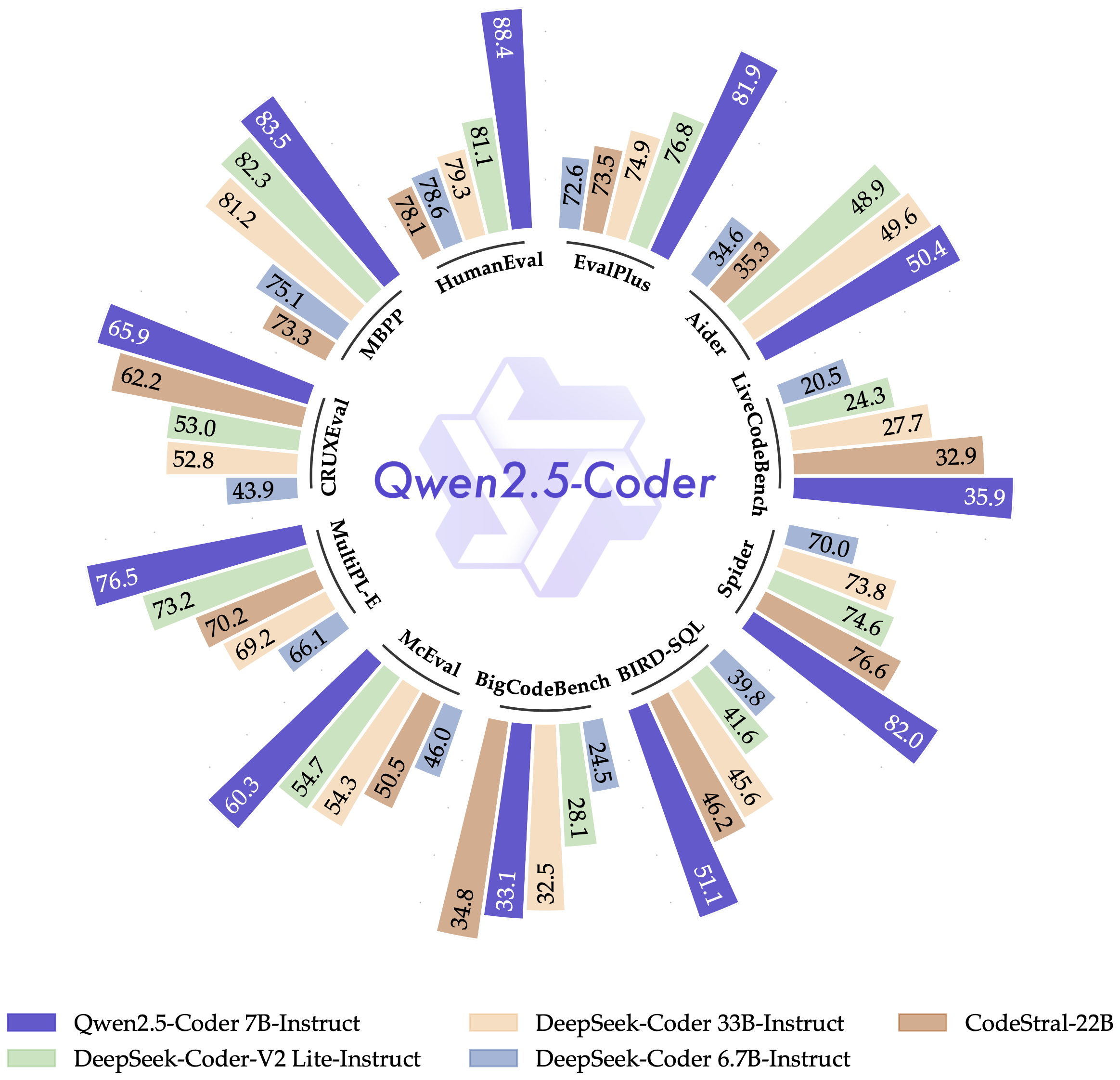
Qwen2.5-Coder is a member of the Qwen2.5 open source family, focusing on code generation, reasoning, repair and other tasks. It improves coding capabilities by amplifying large-scale coding training data while maintaining mathematical and general capabilities. The model supports 92 programming languages and achieves significant improvements in code-related tasks. Qwen2.5-Coder adopts the Apache 2.0 license and is designed to accelerate the application of code intelligence.
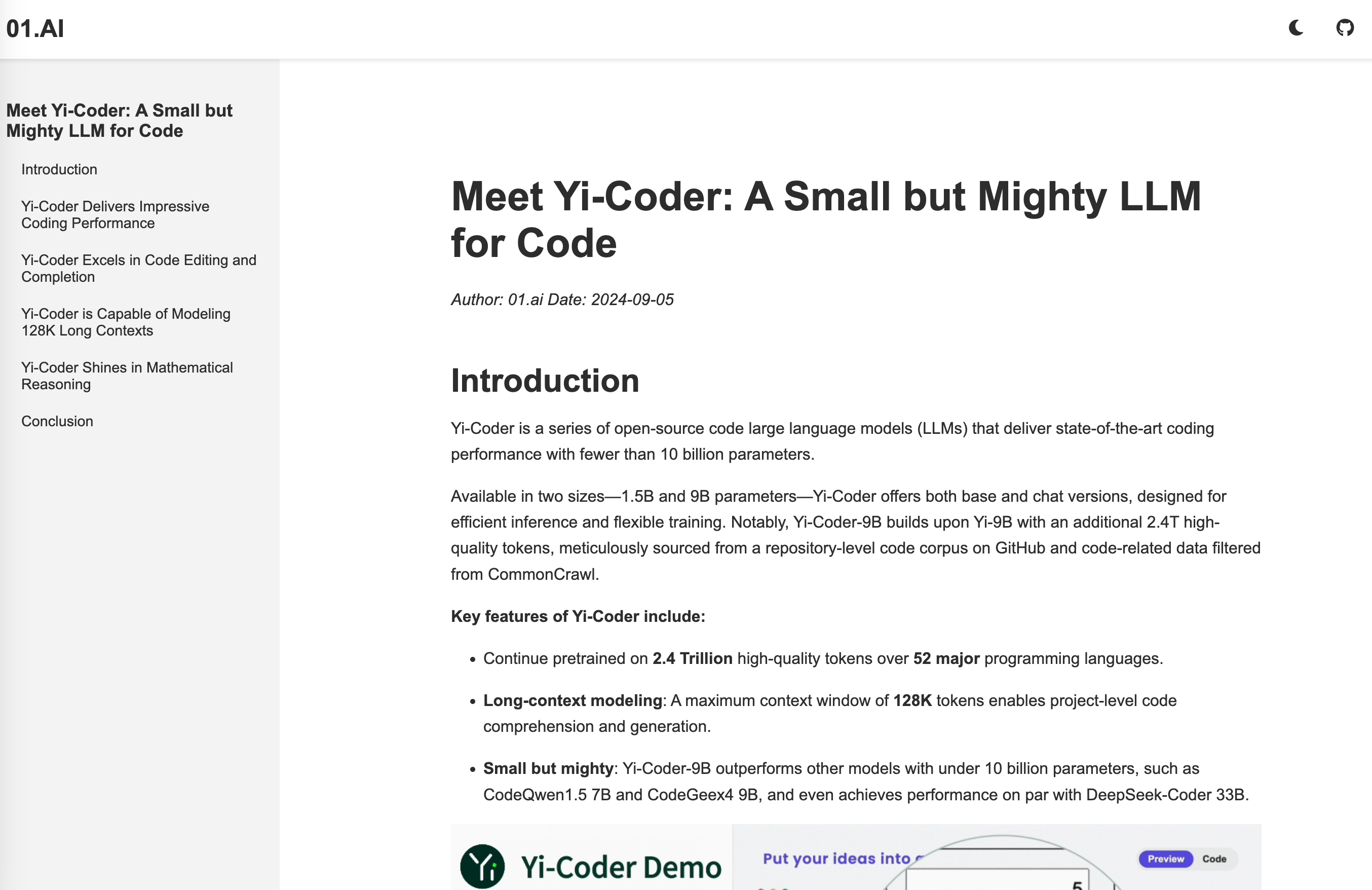
Yi-Coder is a family of open-source large-scale language models (LLMs) that provide state-of-the-art coding performance with less than 10 billion parameters. It comes in two sizes—1.5B and 9B parameters—in base and chat versions and is designed for efficient inference and flexible training. Yi-Coder-9B was trained on an additional 2.4 trillion high-quality tokens on GitHub's code base-level code corpus and code-related data filtered from CommonCrawl. Yi-Coder excels at a variety of programming tasks, including basic and competitive programming, code editing and warehouse-level completion, long-context understanding, and mathematical reasoning.
Llama Coder is an artificial intelligence-based code generator powered by Llama 3.1 and Together AI. It can understand users' ideas and convert them into actual application codes, greatly improving development efficiency and innovation speed. The product has powerful AI model support behind it and is highly intelligent and flexible. It is a revolutionary technology in the field of programming.
SuperCoder is an open source autonomous software development system that leverages advanced AI tools and agents to simplify and automate coding, testing and deployment tasks, improving efficiency and reliability. It supports multiple programming languages and frameworks to meet different development needs.
Mamba-Codestral-7B-v0.1 is an open source code model based on the Mamba2 architecture developed by the Mistral AI Team, with performance comparable to state-of-the-art Transformer-based code models. It performs well on multiple industry-standard benchmarks, providing efficient code generation and understanding capabilities for programming and software development domains.
Codestral Mamba is a language model released by the Mistral AI team that focuses on code generation. It is based on the Mamba2 architecture and has the advantages of linear time reasoning and the ability to model infinite sequences in theory. The model is professionally trained with advanced coding and inference capabilities that rivals current state-of-the-art Transformer-based models.
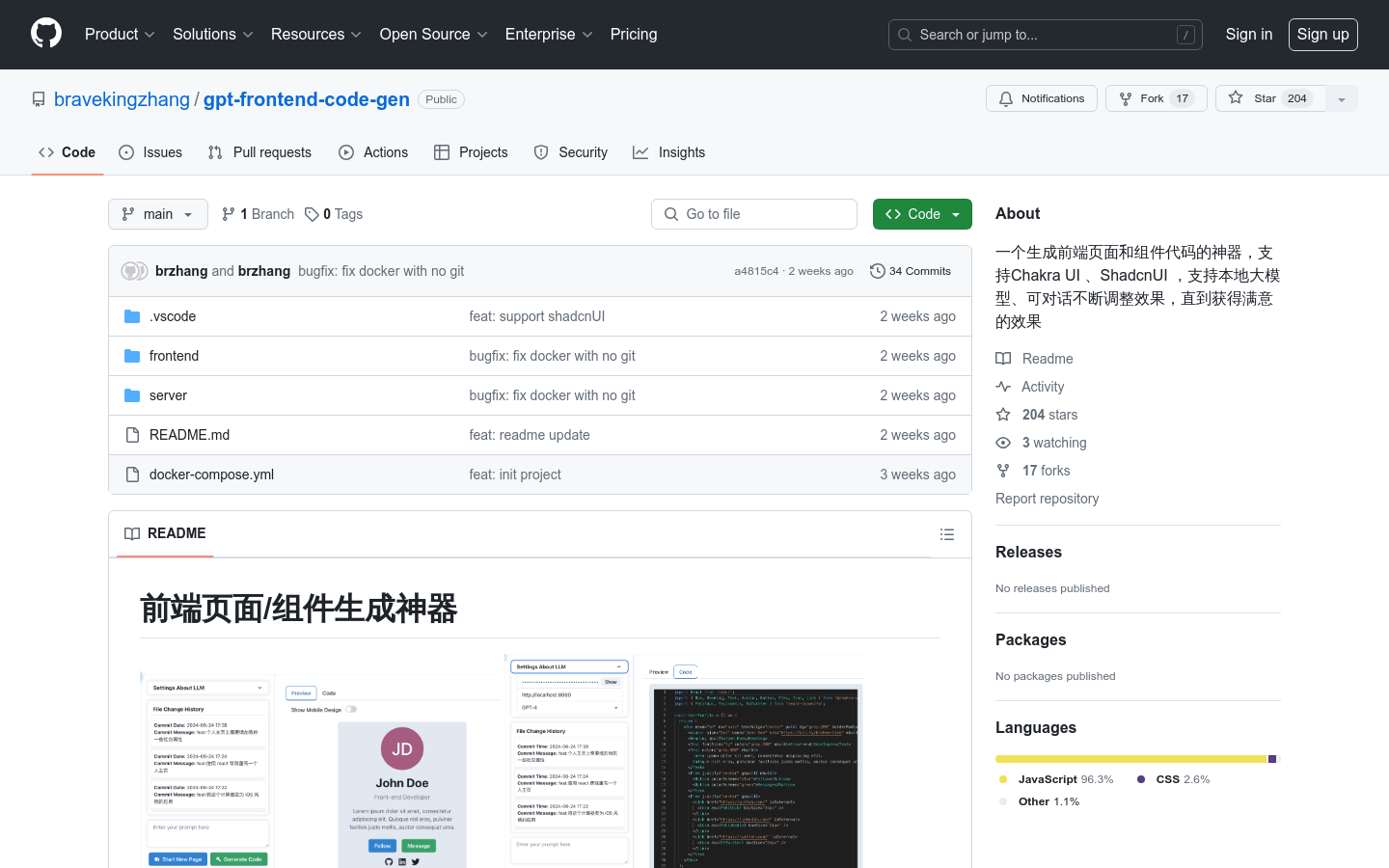
gpt-frontend-code-gen is a front-end project built based on React and Vite, combined with Koa back-end service, to realize the function of generating and previewing front-end pages. It uses the GPT-4 model and supports Chakra UI and ShadcnUI component generation, allowing developers to continuously iterate and modify the page through dialogue until satisfactory results are achieved.
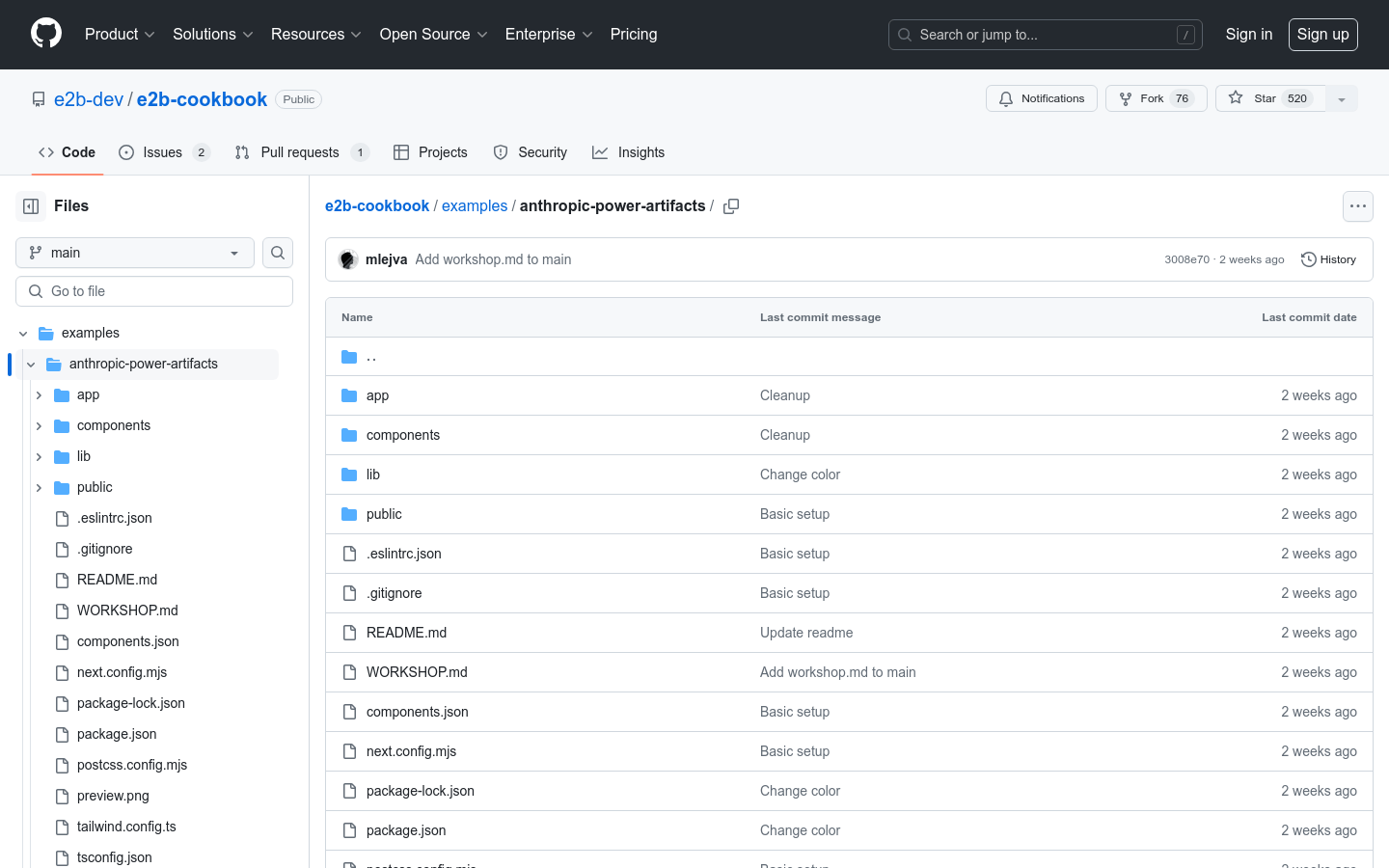
Anthropic Power Artifacts is an open source project that replicates Anthropic's Artifacts user interface in its Claude chat application. The project uses E2B’s Code Interpreter SDK to safely execute AI-generated code. E2B provides a cloud sandbox environment that can safely run AI-generated code and can handle installing libraries, running shell commands, executing Python, JavaScript, R and Nextjs applications, etc.
CodeGeeX4-ALL-9B is the latest open source version of the CodeGeeX4 series model. Based on GLM-4-9B continuous training, it significantly improves code generation capabilities. It supports code completion, generation, code interpretation, web search, function calling, code Q&A and other functions, covering multiple scenarios of software development. It performs well on public benchmarks such as BigCodeBench and NaturalCodeBench. It is the strongest code generation model with less than 1 billion parameters, achieving the best balance between inference speed and model performance.
Meta Large Language Model Compiler (LLM Compiler-13b-ftd) is an advanced large language model built on Code Llama, focusing on compiler optimization and code reasoning. It shows excellent performance in predicting LLVM optimization effects and assembly code decompilation, which can significantly improve code efficiency and reduce code size.
LLM Compiler-7b-ftd is a large language model developed by Meta, based on Code Llama with improvements for code optimization and compiler inference. It performs well in predicting LLVM optimization effects and can perfectly simulate compiler output, making it an ideal tool for compiler optimization tasks.
LazyLLM is a development tool dedicated to simplifying the construction process of artificial intelligence applications. By providing low-code solutions, developers can easily assemble AI applications containing multiple agents even if they do not understand large models. LazyLLM supports one-click deployment of all modules, cross-platform compatibility, automatic grid search parameter optimization, and efficient model fine-tuning to improve application effects.
Semantic Kernel is a software development kit (SDK) that integrates large language models (LLMs) such as OpenAI, Azure OpenAI, and Hugging Face. It allows developers to interact with AI within a few lines of code by defining cascadable plug-ins. It features the ability to automatically orchestrate AI plug-ins, allowing users to generate plans to achieve specific goals through LLM, and have the Semantic Kernel execute the plan.
MacAIverse is a macOS-style open source desktop environment built entirely with AI-generated code and built using React. The project was initially created by the Claude AI assistant and is now open to other Claude instances or other developers to contribute new applications. It follows macOS design principles, maintains consistency with the overall desktop environment, and achieves smooth animations and responsive layout through Tailwind CSS and framer-motion libraries.
Amplication is an open source, powerful development platform designed to revolutionize the creation of .NET and Node.js applications. It uses AI technology to quickly transform ideas into production-ready code, automating back-end application development to ensure consistency, predictability, and compliance with the highest standards. Amplication's user-friendly interface facilitates seamless integration of APIs, data models, databases, authentication and authorization. It is built on a flexible plug-in architecture that allows easy customization of code and provides diverse integration options. Amplication's focus on collaboration simplifies team-oriented development, making it ideal for teams of all sizes, from startups to large enterprises.
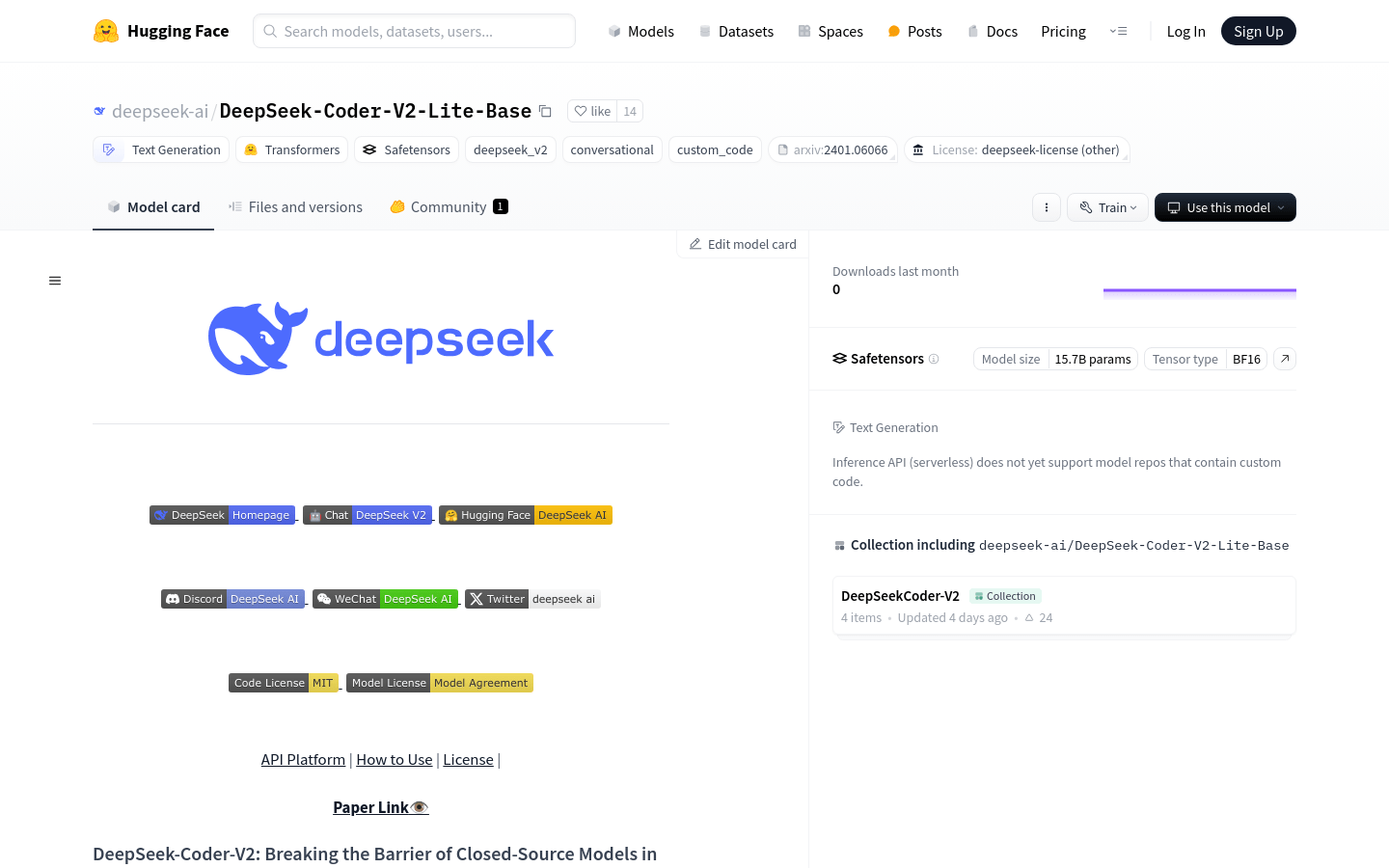
DeepSeek-Coder-V2 is an open source Mixture-of-Experts (MoE) model designed for code languages and its performance is comparable to GPT4-Turbo. It excels on code-specific tasks while maintaining comparable performance on general language tasks. Compared with DeepSeek-Coder-33B, the V2 version has significantly improved code-related tasks and reasoning capabilities. In addition, the programming languages it supports are expanded from 86 to 338, and the context length is also expanded from 16K to 128K.
DeepSeek-Coder-V2 is an open source Mixture-of-Experts (MoE) code language model with performance comparable to GPT4-Turbo and excellent performance on code-specific tasks. Based on DeepSeek-Coder-V2-Base, it is further pre-trained through a high-quality multi-source corpus of 6 trillion tokens, significantly enhancing coding and mathematical reasoning capabilities while maintaining performance on general language tasks. The supported programming languages have been expanded from 86 to 338, and the context length has been expanded from 16K to 128K.
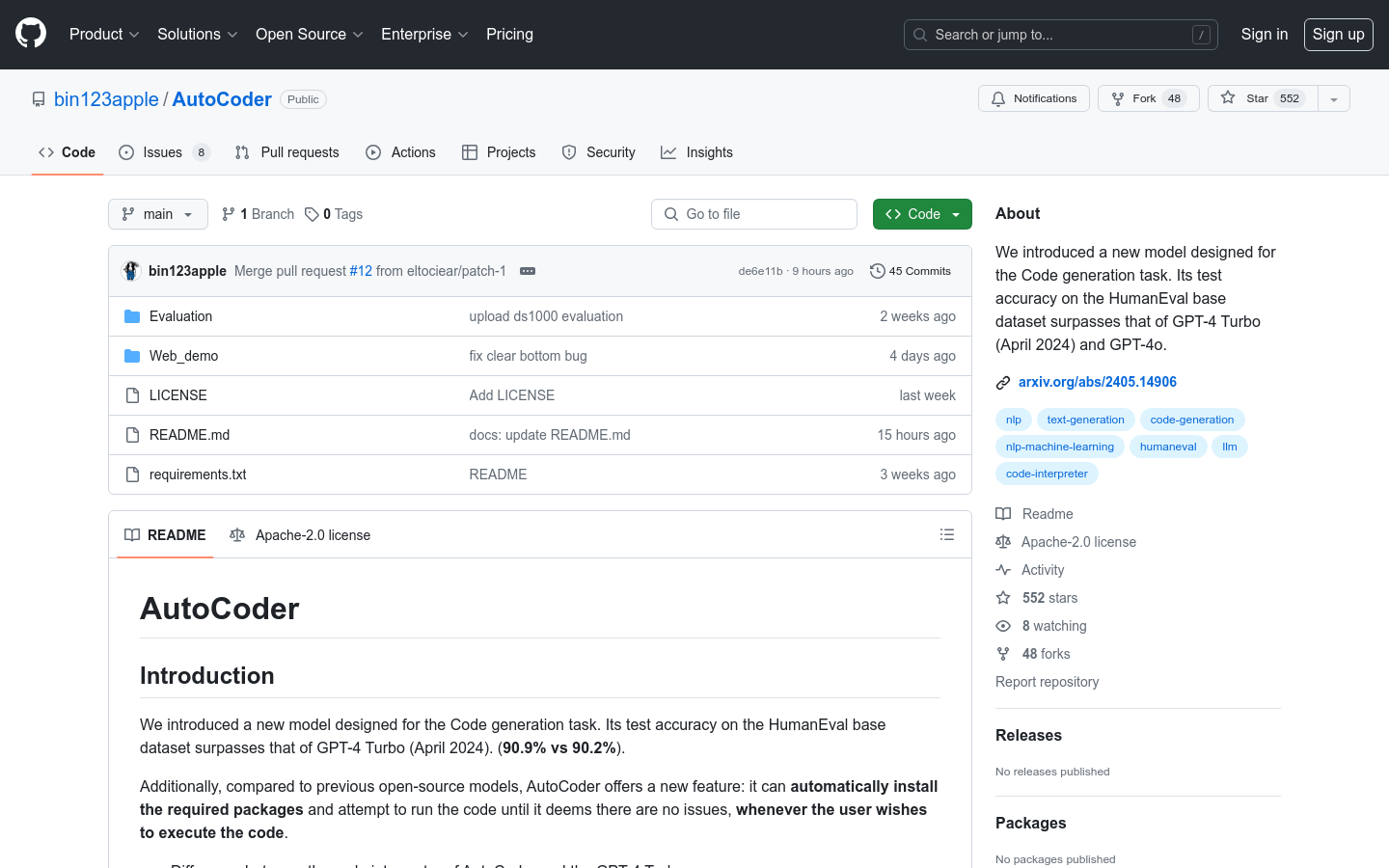
AutoCoder is a new model designed specifically for code generation tasks, and its test accuracy exceeds GPT-4 Turbo (April 2024) and GPT-4o on the HumanEval benchmark dataset. Compared with the previous open source model, AutoCoder provides a new feature: it can automatically install the required packages and try to run the code when the user wants to execute it until it is sure that there are no problems.
Codestral-22B-v0.1 is a large-scale language model developed by the Mistral AI Team. It has been trained on more than 80 programming languages, including Python, Java, C, C++, JavaScript, and Bash. The model can generate code based on instructions, or interpret and reconstruct code snippets. It also supports the Fill in the Middle (FIM) function, which is used to predict the middle part of the code, especially suitable for plug-ins of software development tools, such as VS Code. The model currently does not have a content moderation mechanism, but the development team is seeking community cooperation to enable deployment in environments that require content moderation.
Codestral is the first code generation AI model launched by the Mistral AI team, which helps developers write and interact with code by sharing instructions and completing API endpoints. It is trained on more than 80 programming languages, including Python, Java, C, C++, JavaScript and Bash, etc., and can complete coding functions, write tests and use intermediate filling mechanisms to complete part of the code. Codestral sets a new standard in performance, outperforming all other models on RepoBench with a 32k context window, larger than the competition's 4k, 8k or 16k. In addition, it provides a dedicated API endpoint codestral.mistral.ai, allowing users to use Instruct or Fill-In-the-Middle routing in the IDE, and has an 8-week free beta period. Codestral is also integrated into application frameworks such as LlamaIndex and LangChain, as well as VSCode and JetBrains environments, allowing developers to generate and interact with code in these environments.
AnyNode is a plugin designed for ComfyUI that leverages the power of LLMs (Large Language Models) to generate the desired output based on user input. It supports the use of OpenAI API or local LLMs API, allowing users to implement complex programming tasks through simple configuration and instructions without writing code. The main advantages of this plug-in include ease of use, flexibility and powerful functions, which can significantly improve development efficiency, especially suitable for developers who need rapid prototyping and automation tasks.
CodiumAI Cover-Agent is a tool that leverages generative AI to automate test generation and enhance code coverage, aiming to simplify development workflows. It automatically creates unit tests for software projects by interacting with large language models (LLMs), ensuring testing comprehensiveness and quality assurance. Cover-Agent is planned to be integrated into popular CI platforms, and the community is invited to collaborate and help extend Cover Agent's capabilities to make it a cutting-edge solution in the field of automated unit test generation.
Granite Code Models are a series of open source basic models developed by IBM, specifically designed for code generation tasks, such as fixing errors, interpreting code, documenting code, etc. These models are trained on multiple programming languages and achieve state-of-the-art performance on different code-related tasks. Key benefits include comprehensive performance, enterprise-grade trust, and training with IBM’s AI ethical principles.
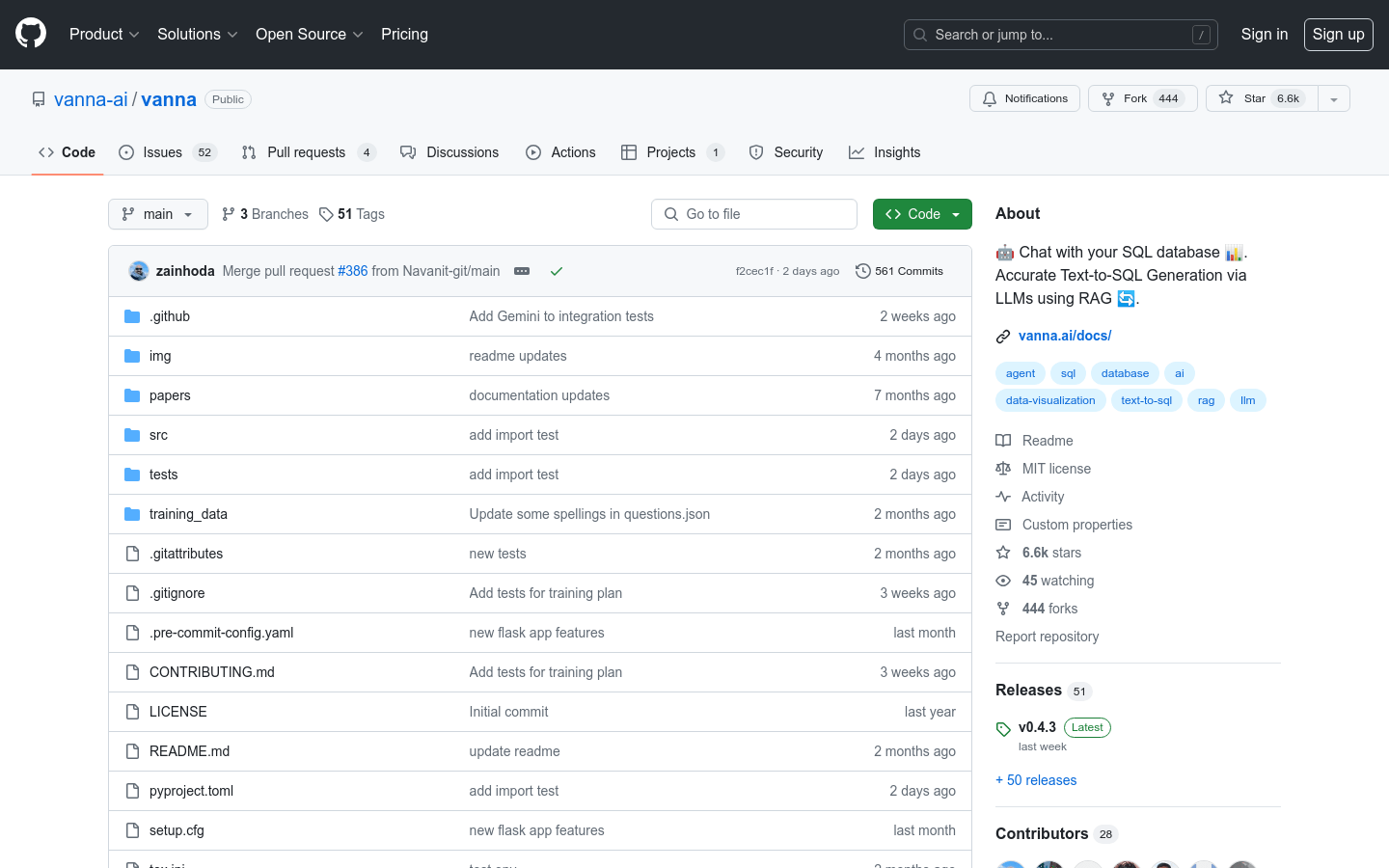
Vanna is an open source Python framework using Retrieval-Augmented Generation (RAG) technology for SQL generation and related functions. It converts natural language questions into SQL queries by training a RAG model, allowing users to interact with the database in the form of questions. The main advantages of Vanna include high accuracy, security, privacy, self-learning ability, and support for any SQL database.
GitHub Copilot for Infrastructure as Code (Infra Copilot for short) is a tool that uses machine learning technology to help infrastructure professionals automatically generate accurate infrastructure code. It works by understanding the context of infrastructure tasks, allowing professionals to express requirements using natural language and receive corresponding code recommendations. Infra Copilot not only simplifies the infrastructure as code (IaC) development process, but also ensures consistency across environments and projects, accelerates the onboarding and learning process of new team members, significantly improves work efficiency and saves time.
Jinno is a plugin that uses AI to develop HTML or React components. It can modify React, HTML and CSS code. It supports React, CSS and JavaScript, and provides color picker, font selector, page ruler and other functions. React, HTML and CSS code can be exported, suitable for developers and designers.
aiXcoder-7B is a large code model with 7 billion parameters, specially designed for enterprise-level software development. Its performance exceeds the 34 billion-parameter Codellama model and performs excellently in real development scenarios. Supports algorithmic questions and multi-file complex code scenarios, generates complete code blocks, prefers short codes, and improves maintenance costs and code quality. Open source and privately deployable.
ChatDev is a virtual software company composed of agents playing different roles (such as CEO, product manager, technical director, programmers, testers, etc.). These agents collaborate to develop software by participating in specialized functional workshops such as design, coding, and testing. ChatDev aims to provide an easy-to-use, highly customizable and extensible framework based on large language models (LLM), which is an ideal scenario for studying collective intelligence. It supports customized settings, such as customized software development process, role settings, etc. Users only need to use natural language to describe their ideas, and ChatDev can efficiently generate the corresponding software.
Stability AI announces the launch of Stable Code Instruct 3B, a large-scale language model specifically designed to understand and execute code-related instructions. The purpose of this model is to help developers write, review and optimize code more efficiently and improve the productivity of software development.
OpenDevin is an open source project with the goal of replicating, enhancing, and innovating Devin—an autonomous AI software engineer capable of performing complex engineering tasks and actively collaborating with users on software development projects. This project explores and expands Devin's capabilities through the power of the open source community, identifying its strengths and room for improvement to guide the progress of the open source code model.
Comate is a programming assistance tool developed by Baidu based on the Wenxin large model. It can provide functions such as automatic code generation, unit test generation, annotation generation, and intelligent question and answer. It supports hundreds of programming languages and is designed to help developers greatly improve coding efficiency. Use Comate to make programming more efficient and convenient. The personal version provides multi-dimensional auxiliary coding capabilities such as business code and test code generation, code optimization and repair, and natural language conversational technical Q&A. On the basis of the personal version, the enterprise version also provides complete data reporting capabilities, helping enterprises analyze application effects, locate performance bottlenecks, and enable one-stop research and development processes to reduce costs and improve efficiency. The privatized deployment version covers all the capabilities of the enterprise version, while supporting large-scale deployment and applications in large enterprises, ensuring usage effects and maintaining data security.
Design2Code is a tool that explores the possibilities of automated front-end engineering. It aims to convert designs into code to increase development efficiency and accuracy.
The Anthropic Cookbook provides code and guidance designed to help developers build projects using Claude, providing reproducible code snippets that are easy to integrate into your own projects. The examples are primarily written in Python, but the concepts can be adapted to any programming language that supports interaction with the Anthropic API.
AI SDK 3.0 is the latest artificial intelligence software development toolkit launched by Vercel, which adds support for generative user interface (UI). This means that developers can use AI SDK 3.0 to quickly create and iterate user interface designs and improve development efficiency. AI SDK 3.0 combines advanced machine learning technology and user feedback to automatically generate UI elements and layouts that adapt to different scenarios.
StarCoder2 is a 150 billion parameter Transformer model that is pre-trained on more than 600 programming language data sets, including GitHub, and uses technologies such as Grouped Query Attention. The model can be used for code generation tasks and supports multiple programming languages.
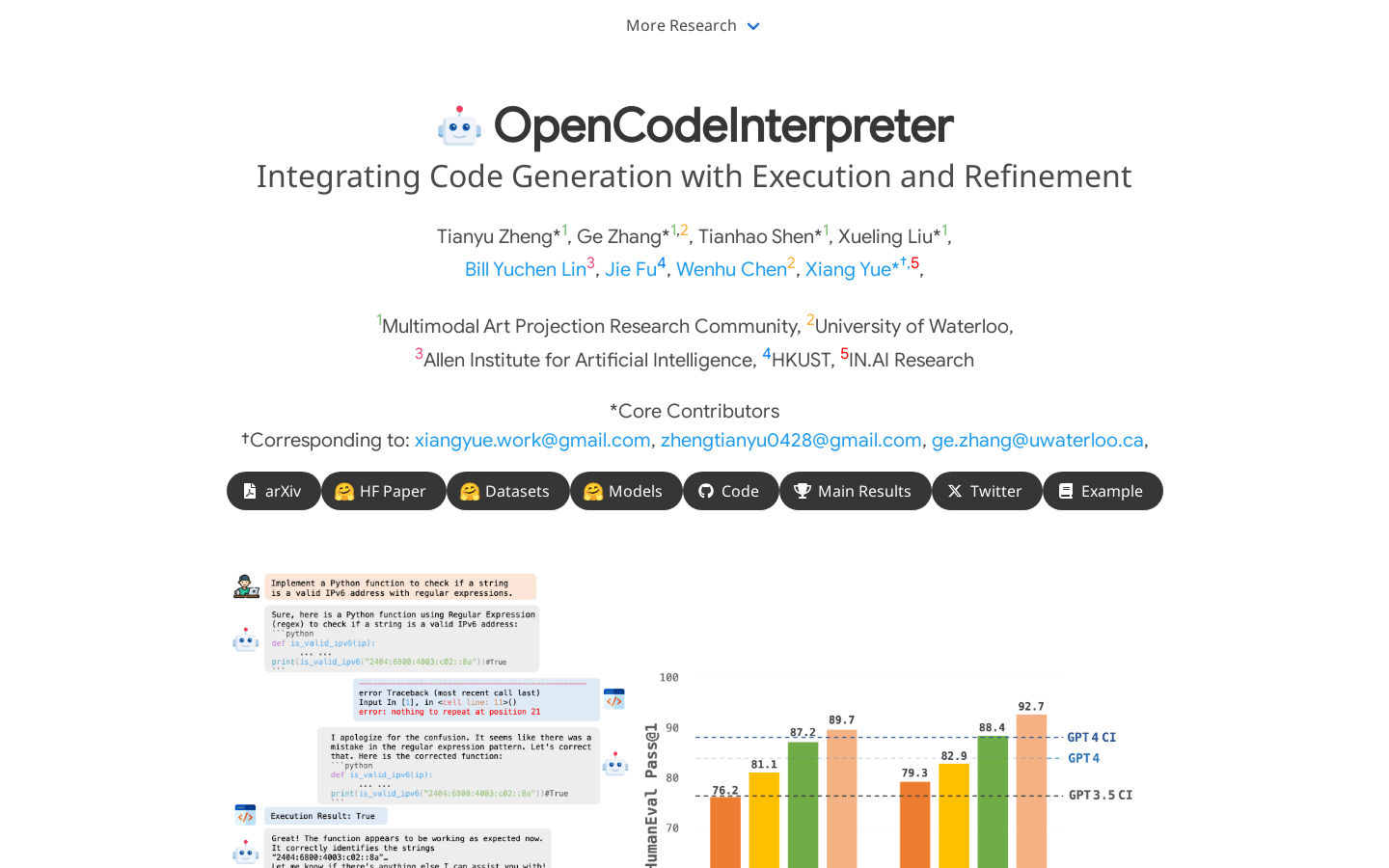
OpenCodeInterpreter is an open source code generation system that combines code generation, execution and iterative optimization. It uses the Code-Feedback data set containing 68,000 interactions for training, and can dynamically optimize the code based on execution output and human feedback. Evaluations on benchmarks such as HumanEval and MBPP show its outstanding performance in code generation. The average accuracy of OpenCodeInterpreter with 33B parameters in HumanEval and MBPP can reach 83.2%, which is comparable to the 84.2% of the GPT-4 code interpreter, and can be improved to 91.6% through manual feedback. OpenCodeInterpreter bridges the gap between open source code generation models and proprietary systems like GPT-4.
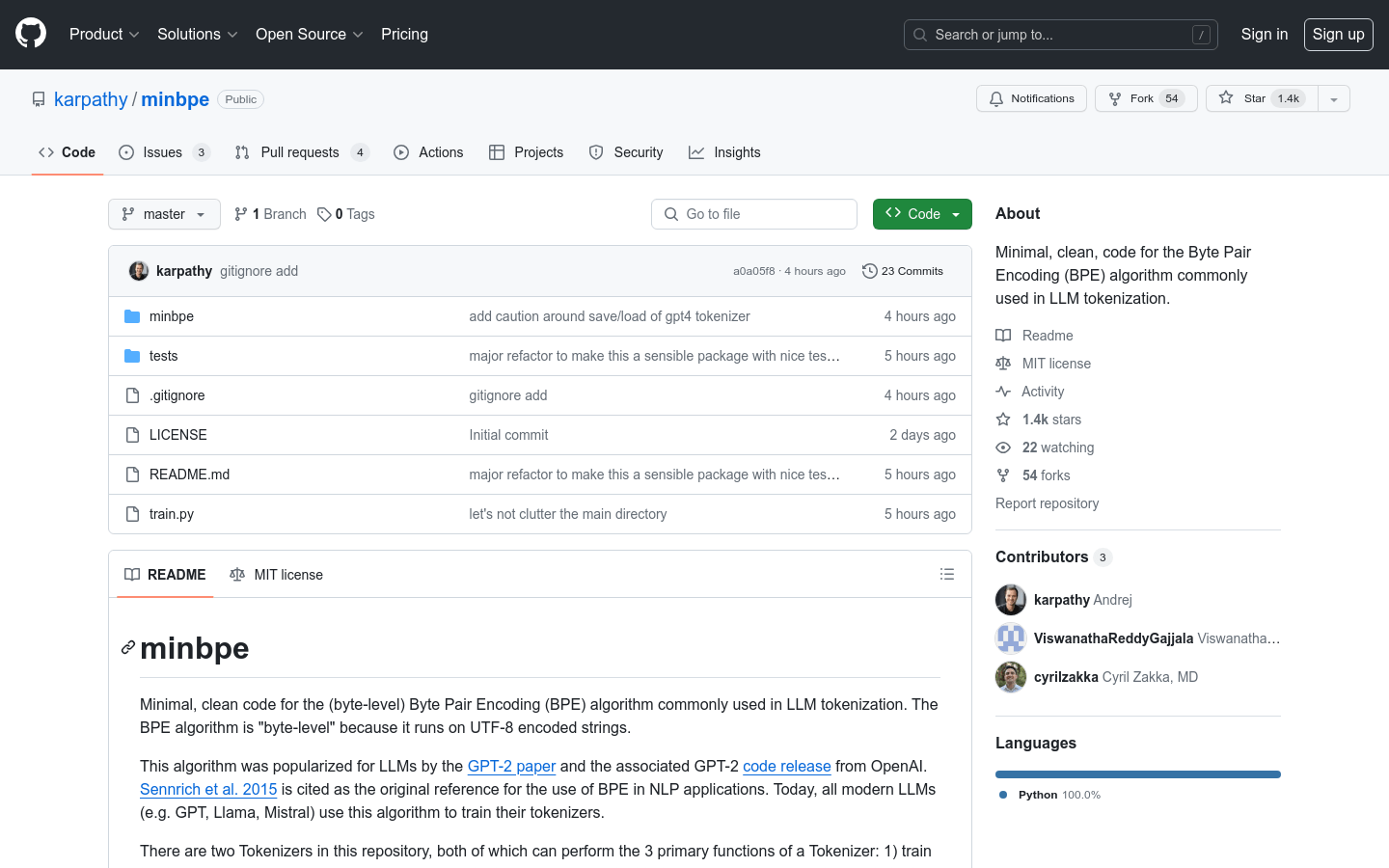
The minbpe project aims to create clean, educational code implementations of BPE algorithms commonly used in LLM. The project provides two Tokenizers, which implement the main functions of training, encoding, and decoding of the BPE algorithm. The code is concise and easy to read, providing users with a convenient and efficient experience. This project has shown great attention and attraction, and I believe it will play an important role in the development of LLM and natural language processing technology.
SERL is a carefully implemented code base that contains an efficient off-policy deep reinforcement learning method, as well as methods for calculating rewards and resetting the environment, a high-quality and widely adopted robot controller, and some challenging example tasks. It provides a resource for the community, describes its design choices, and presents experimental results. Surprisingly, we find that our implementation enables very efficient learning, requiring only 25 to 50 minutes of training for strategies such as PCB assembly, cable routing, and object relocation, improving on state-of-the-art results reported in the literature for similar tasks. These strategies achieve perfect or near-perfect success rates, are extremely robust even under perturbations, and exhibit emergent recovery and correction behaviors. We hope that these promising results and our high-quality open source implementation will provide the robotics community with a tool to promote further development of reinforcement learning in robotics.
Code Llama 70B is a large-scale open source code generation language model that can generate code in multiple programming languages from natural language prompts or existing code snippets. It is based on the 17.5 billion parameter universal language model Llama 2. After being fine-tuned specifically for code generation tasks, it can efficiently and accurately generate codes in Python, C++, Java and other languages. Code Llama 70B achieved a high score of 67.8 in the human evaluation benchmark test, outperforming previous open source models and comparable to patented models. Its powerful code generation capabilities can improve programming efficiency, lower coding thresholds, and inspire more innovative applications.
AlphaCodium is a test-based, multi-stage, code-oriented iterative flow approach designed to improve the performance of LLMs on code problems. It is particularly suitable for competitive programming problems by optimizing the model's performance on code generation tasks. Users can select the corresponding model according to the configuration (such as "gpt-4", "gpt-3.5-turbo-16k", etc.) and use AlphaCodium to solve specific problems or the entire dataset. The tool also provides a series of best practices, such as YAML structured output, semantic reasoning, modular code generation, etc., which can be widely applied to other code generation tasks.
Stable Code 3B is a decoder-only language model with 2.7 billion parameters, pre-trained on 130 billion diverse text and code data tokens. Stable Code 3B was trained on 18 programming languages and, when tested using BigCode’s evaluation tools, demonstrated state-of-the-art performance on multiple programming languages compared to similarly sized models. It supports long contexts, uses sequences up to 16384 in length for training, and has a padded intermediate function (FIM). Users can start generating text with Stable Code 3B through the code snippets on the Hugging Face website. Developed by Stability AI, the model is based on the GPT-NeoX library and is available in English and programming languages.
ant-codeAI uses OpenAI and Gemini technologies to generate highly available code, supporting web (React, Vue, Tailwind CSS), native (react native) and other codes. It uses GPT-4 Vision to generate code. Ways to generate code include taking screenshots, sketching, and entering ideas.
vx.dev is an open source v0.dev replacement. It has the following advantages: - Low cost: through prompt engineering technology, the cost of use can be greatly reduced - Easy to customize: Provides open source tips and can customize UI components or code styles according to needs - GitHub seamless integration: the generated code is stored on GitHub, with built-in version control, code review and other functions vx.dev works by using the GPT-4 model to generate code based on predefined prompts. The main cost is the number of tokens entered and completed. Prompts are stored in prompts/ui-gen.md and contain instructions for shadcn/ui, lucide and nivo charts. By removing unnecessary component directives, the API cost per build can be reduced. vx.dev can be easily customized. Users can modify based on existing prompts, use other UI libraries or adjust coding style. The generated code is stored on GitHub and has features such as version control and collaboration. Private repositories ensure visibility of generated results.
gpt-engineer is a code-free code generation tool based on GPT-3. Users only need to describe the required functions in natural language, and the corresponding code implementation can be generated. It is very suitable for rapid prototyping and can greatly improve coding efficiency. The biggest advantage of gpt-engineer is that it is completely code-free. Users do not need to learn any language to generate various code implementations. It also has the ability to remember and continuously improve, and can continuously optimize code quality according to user needs. Overall, gpt-engineer is a very promising new programming tool.
ScriptGPT is a neural network tool based on GPT-3 that can automatically generate JavaScript and TypeScript function codes based on the configuration provided by the user. It uses natural language processing technology and only requires users to provide simple code function descriptions to generate corresponding code implementations. This tool can greatly improve development efficiency. Users only need to focus on code functions and business logic, and repetitive code writing work can be completed by ScriptGPT. The main advantages are: 1. Improve code development speed; 2. Reduce duplication of work; 3. Automatically add test cases; 4. Automatically install the required code library; 5. The generated code can be used directly. This product provides services in two forms: command line and API, and developers can choose the appropriate method to integrate into their own development process.
GPT Pilot is an AI development tool that enables scalable applications to be written from scratch under developer supervision. You specify the type of application you want to build, and GPT Pilot asks clarifying questions, creates product and technical requirements, sets up the environment, and writes the application step by step, just like in real life. As each task is completed, it will ask you to review it or offer help if you encounter problems. This way, GPT Pilot acts like a developer, and you are a senior developer leading development, reviewing the code and providing assistance when needed.
CodeGeeX2 is the second generation model of the multi-language code generation model CodeGeeX. Based on the ChatGLM2 architecture, the code generation capability and model deployment performance have been greatly improved. Supports code completion, code generation, code interpretation, document generation and other functions for more than 100 programming languages.
Coffee is a tool that uses artificial intelligence to accelerate front-end development, enabling you to build and iterate user interfaces 10x faster. It works with any React codebase and produces clean, maintainable code. Coffee is designed to be a more user-friendly tool that can write and interact with real code.
AlphaCode 2 is an AI-powered programming tool released by Google. Powered by the Gemini model, it excels in programming competitions using multiple languages and has the ability to understand complex problems and solve programming challenges.
DevOpsGPT is an AI-driven software automation development solution that combines large-scale language models and DevOps tools to convert natural language requirements into working software. This solution greatly improves development efficiency, shortens the development cycle, reduces communication costs, and improves the quality of software delivery.
Langroid is a lightweight, extensible and principled Python framework that makes it easy to build LLM-based applications. You can set up agents, equip them with optional components (LLMs, vector stores, and methods), assign them tasks, and let them collaborate to solve problems by exchanging messages. This multi-agent paradigm is inspired by the Actor framework (but you don't need to know anything about this!). Langroid offers a completely new way of developing LLM applications that is thoughtfully thought out in simplifying the developer experience; it does not use Langchain. We welcome contributions - see the contributions documentation for contribution ideas.
LangChain is a library that helps developers build applications that combine large language models (LLMs) with other computational or knowledge sources through compositionality. It provides end-to-end examples of various application scenarios, including question answering, chatbots, agents, and more. LangChain also provides functions such as general interfaces to LLMs, chain calls, data enhancement generation, memory and evaluation. Please visit the official website for pricing information.
AICodeConvert integrates AI code conversion and generation capabilities, which can efficiently convert codes between different programming languages and automatically generate high-quality code. This powerful combination provides developers with a convenient and intelligent coding experience. All services are completely free and are your best AI programming assistant.
Open Interpreter is an open source local running implementation that allows language models to run code (Python, JavaScript, Shell, etc.) on your computer. You can interact with Open Interpreter through a ChatGPT-style interface in the terminal, just run $ interpreter after installation. This gives you a natural language interface that leverages common computer capabilities: create and edit images, videos, PDFs, and more; control the Chrome browser for research; plot, clean, and analyze large data sets, and more. It is worth noting that you will be asked to approve the code before it is executed.
Dlight.js is a DX-first UI rendering library with an intuitive and simple API designed to provide a pleasant development experience. It has an extremely small file size (only 4KB) and performs quickly and efficiently without the need for manual optimization. Dlight uses a syntax of function calls and dot notation to avoid writing outdated and hard-to-read XML code. It's reactive, the API is clean and simple, and there's no need to memorize complex functions or libraries. Dlight is suitable for building simple websites or complex web applications.
Code Llama is an advanced large-scale language model that can generate code from text prompts. It is one of the currently publicly available language models that achieves the best performance on programming tasks. Code Llama helps developers become more productive, lowers barriers to coding, and serves as an educational tool to help programming learners write more robust, better-documented software. Code Llama is available in several editions, including a basic edition, a dedicated edition for Python, and a customized edition for natural language instructions. It supports many popular programming languages such as Python, C++, Java, etc. Code Llama is free for research and commercial use.
SafeCoder is a code generation solution for enterprises. Based on a large-scale open source language model, it can fine-tune an enterprise's internal code base and generate code suggestions suitable for enterprise business scenarios, thereby significantly improving development efficiency. This solution attaches great importance to security and compliance. Code training and inference are all completed within the customer's infrastructure, ensuring that the code and model will not be leaked to any third party. Key features include: based on open source models and dataset training, no vendor lock-in; supports multiple hardware deployments and is optimized for enterprise IT infrastructure; is compatible with mainstream IDEs and provides developers with instant code prompts.
CodeWP is a WordPress code generator that uses AI and professional WordPress, WooCommerce and other models to help users build websites faster and better. It can generate various WordPress code snippets, including PHP, JS, WooCommerce, and more. CodeWP supports saving, exporting and sharing code snippets, and provides multi-language support.
CodeWP is a WordPress code generator that uses artificial intelligence and professional WordPress, Woo and other specialized models to help you build better websites faster. It can help you generate various WordPress code snippets, such as WP_Query query, function generation, WooCommerce filters and actions, etc., while supporting saving, exporting and sharing code snippets.
Explore other subcategories under programming Other Categories
768 tools
465 tools
368 tools
294 tools
140 tools
85 tools
66 tools
61 tools
AI code generation Hot programming is a popular subcategory under 61 quality AI tools